
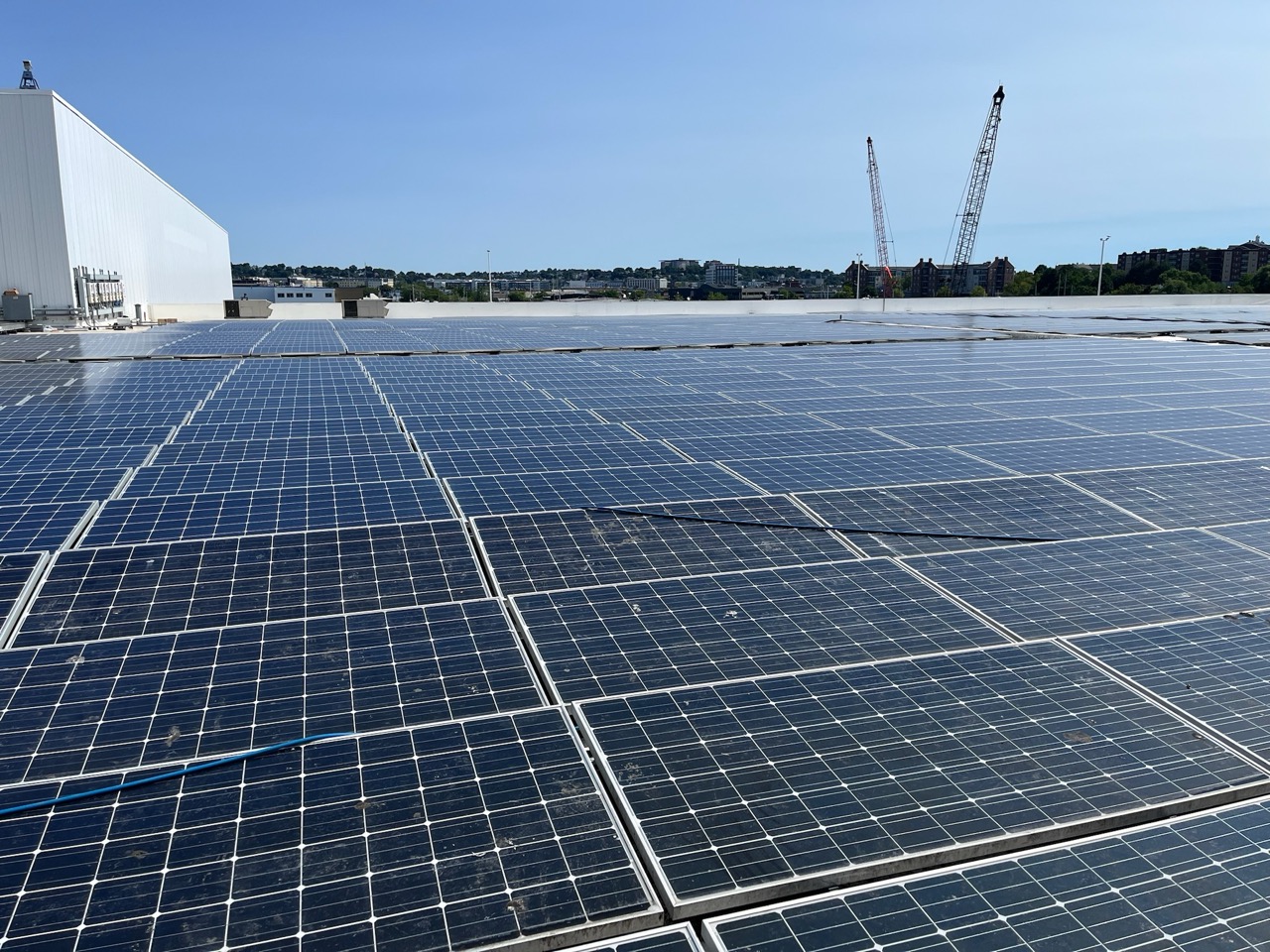
Solar panels are often described as low maintenance, and that’s largely accurate. What gets lost in that description is that “low maintenance” doesn’t mean maintenance-free. Over time, environmental buildup affects performance, and the impact is easy to miss if you’re not looking for it.
The question isn’t whether solar panels get dirty. They do. The real question is whether that dirt reduces output enough to justify cleaning. In New England, the answer often comes down to how much performance is being lost without the owner realizing it.
Most Solar Performance Loss Happens Gradually
Solar panels rarely show obvious signs of reduced performance. They continue generating electricity, just at a lower level than they could be. This slow decline is what makes the issue easy to ignore.
Throughout the year, different types of buildup accumulate. Spring brings heavy pollen that settles across panel surfaces. Summer adds dust and airborne debris. Bird droppings can linger and block sunlight in concentrated areas. In coastal regions, salt exposure creates a film that doesn’t fully wash away with rain.
Research from the National Renewable Energy Laboratory (NREL) shows that soiling—the accumulation of dirt, dust, pollen, and other environmental residue on solar panels—reduces photovoltaic energy output and can lead to substantial financial losses over time.
Individually, these factors may seem minor. Over time, they combine to reduce overall efficiency.
How Much Efficiency Is Actually Lost?
Under typical New England conditions, it’s common for dirty panels to lose between 5% and 20% of their output. The exact number depends on the environment and how long the buildup has been accumulating.
A lightly soiled system may only see a modest dip in production. A system that has gone a full season without cleaning, especially in a high-pollen or coastal area, can experience a much more noticeable drop.
According to the National Renewable Energy Laboratory and studies cited by the U.S. Department of Energy, energy losses from soiling vary widely by region but can reach double-digit percentages when panels are not cleaned over time.
Rainfall helps to a point, but it doesn’t fully clean panel surfaces. It tends to redistribute dirt rather than remove it completely, which is why buildup continues over time.
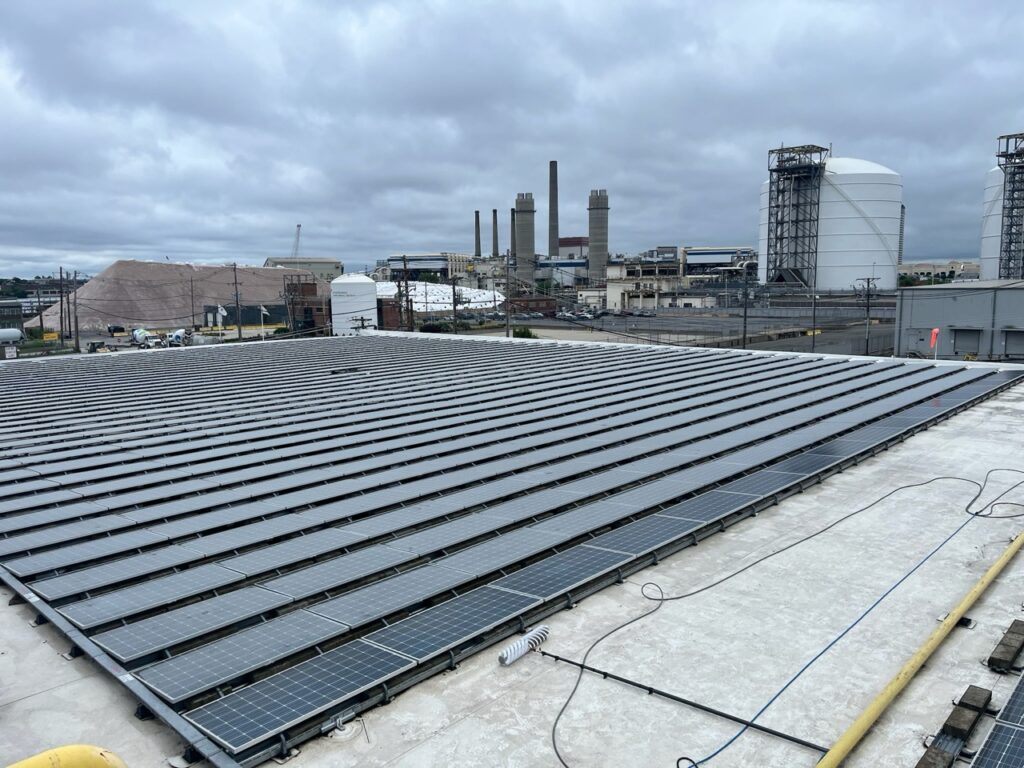
What The Loss of Energy Means in Practical Terms
When you translate percentage loss into actual energy value, the impact becomes clearer.
A system producing around $1,500 worth of energy per year would lose about $150 annually with a 10% drop in efficiency. At 20%, that loss grows to $300. Over multiple seasons, that adds up.
Field observations and industry reporting, including guidance from Solar Energy Industries Association, reinforce that maintaining system cleanliness is one of the simplest ways to avoid preventable production losses.
When compared to the cost of professional cleaning, the decision becomes less about maintenance and more about recovering lost production.
Why New England conditions matter
Climate plays a significant role in how quickly panels accumulate buildup and how effectively they stay clean on their own.
New England presents a mix of challenges. Pollen seasons are dense and persistent. Humidity allows debris to stick rather than blow away. Coastal air introduces salt that clings to surfaces. Winter leaves behind residue that doesn’t fully clear as temperatures rise.
Studies referenced by the National Renewable Energy Laboratory show that regions with higher humidity and airborne particulates tend to experience more persistent soiling effects than dry climates where dust may be more easily displaced.
These conditions make it less likely that panels will maintain optimal performance without occasional cleaning. The conclusion seems clear: solar panel cleaning really makes a difference.
When Solar Panel Cleaning has the greatest impact
Timing influences how much benefit you get from cleaning. Spring is typically the most important window. Panels are coming out of winter with accumulated residue, and solar production is increasing as days grow longer.
If panels remain dirty during this period, the system underperforms when it should be generating its highest output. A well-timed cleaning helps restore efficiency right when it matters most.
A second cleaning later in the season can help maintain that performance, particularly for properties exposed to trees, birds, or ongoing debris.
DIY vs professional cleaning
It’s natural to consider handling cleaning yourself, especially to save money. The risk lies in how easily damage can occur without the right approach.
Improper tools or techniques can scratch panel surfaces or leave behind mineral deposits that reduce efficiency. There’s also the matter of safety, particularly on steep or elevated roofs where access is more complicated than it appears.
Manufacturers and industry groups, including guidance aligned with Solar Energy Industries Association recommendations, generally advise using proper cleaning methods to avoid surface damage and maintain warranty protection.
Professional cleaning focuses on preserving the condition of the panels while restoring performance, without introducing unnecessary risk.
Solar Panel Cleaning: Is it worth it?
For systems that remain relatively clean throughout the year, the benefit may be limited. In most New England settings, though, buildup is consistent enough to affect performance over time.
The decision comes down to whether the energy being lost justifies the cost of restoring output. In many cases, especially where seasonal buildup is significant, it does.
Final thought
Solar panels are designed to produce reliably over many years. Keeping them clean doesn’t change how they work, but it does help them operate as intended.
If the goal is to get consistent performance from your system, periodic solar panel cleaning is a practical step toward maintaining that output rather than letting it gradually decline.
Peak Solar Pro has the tools and the experience to keep your solar panels clean. Get a free estimate today by calling (617) 522-4046 or get started online here.